What a paint protection film job costs in North Jersey has less to do with what you drive than people expect. It is how much of the car you cover. A windshield on its own is the smallest job we do. Full body coverage with a ceramic coating over it is the largest. Most people land somewhere in between.
Most shops price paint protection film by the car. We mostly do not. A full-body PPF job at our Hackensack shop lands in much the same place whether you drive a Model 3 or a full-size Maserati SUV, because the film cost and the install time do not change nearly as much as people expect.
That surprises people, so this post walks through what we look at when a quote gets written, why coverage is the real variable, and where the exceptions are.
Coverage is the price, not the car
When someone asks what PPF costs, they usually expect the answer to start with the vehicle. Ours starts with a question back: how much of it do you want covered?
There are three coverage levels people generally pick between.
Full body. Every painted surface on the car. Doors, roof, hood, fenders, bumpers, quarter panels, the whole thing. It takes about a week in the bay. A full-size SUV and a sedan sit within a hair of each other. A ceramic coating over the film is the usual add-on.
Full nose. The full front bumper, full hood, full fenders and the mirrors. This is the coverage most people actually need, because it protects the surfaces that take highway debris. It runs about three days. This one does move somewhat by vehicle, since a big square front end uses more film than a low sports car nose.
Partial front, sometimes called a clear bra. A narrower strip of the same high-impact areas. Less coverage and less cost, and the trade is that the line where the film ends becomes visible over time as the covered and uncovered paint age differently.
Pick the level first. The number follows from it.
| Factor | Effect on the price |
|---|---|
| How much of the car you cover | This is the price. Partial, full front and full body are different jobs |
| Vehicle size | Little to none on a full body job. A full size SUV lands beside a sedan |
| Paint condition at drop-off | Correction or touch-up before film is extra work |
| Finish of the film | Gloss, satin and stealth are priced differently |
| Removing old film first | Adds labor, and failing film adds more |
| Ceramic coating over the film | Added as a package on top |
Why the vehicle matters less than people think
A full-size SUV has more square footage than a coupe, so the intuition is that it should cost meaningfully more. Two things flatten that out.
First, film is bought in bulk rolls and cut to the vehicle. A larger car uses more of the roll, but the material is not the biggest line in the job.
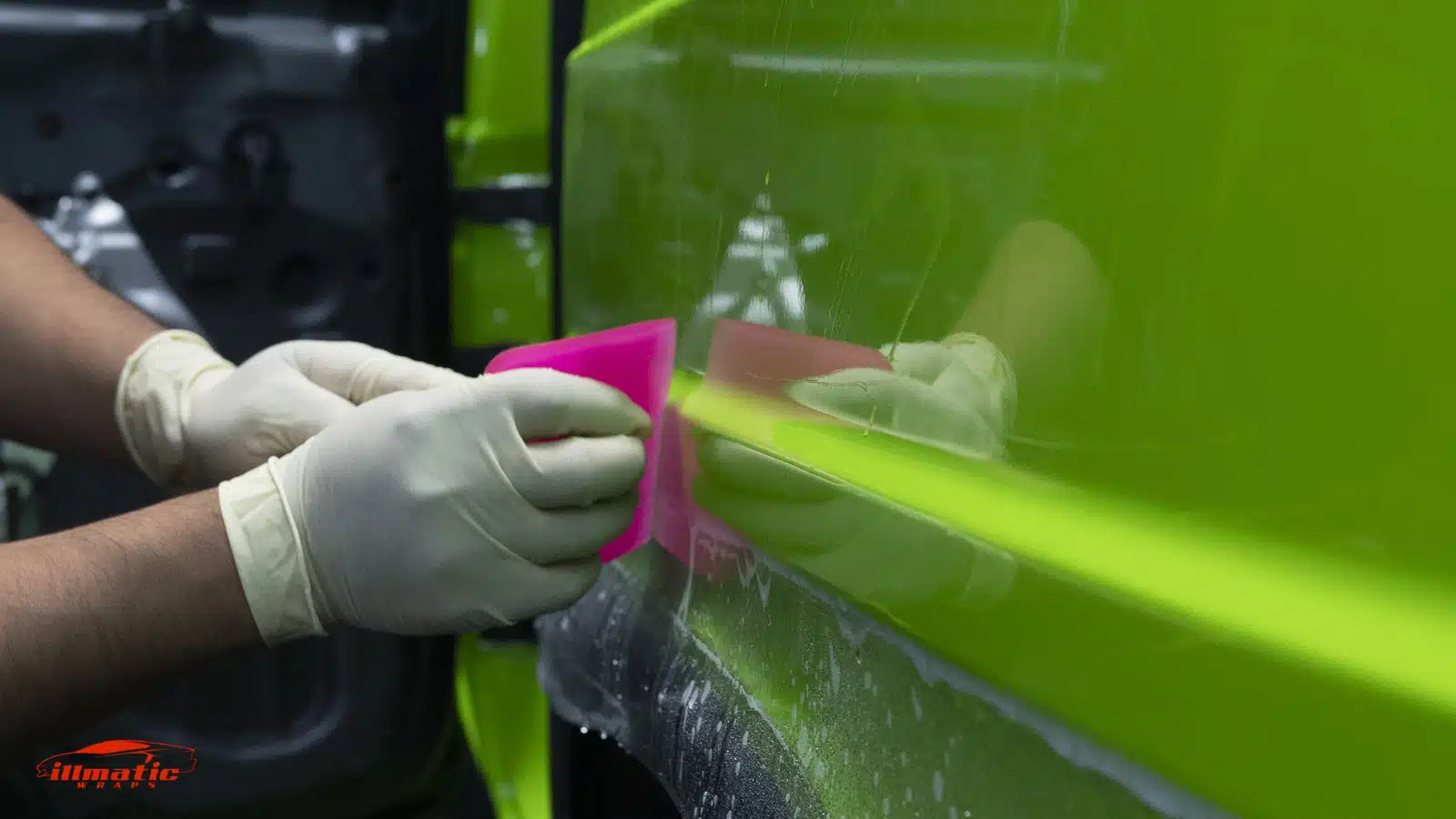
Second, and this is the part that gets missed: labor does not scale with size, it scales with shape. A big flat door panel is fast work. A tight compound curve around a headlight, a sharp crease over a fender arch, a deep vent, a bumper with several separate pieces that all have to be wrapped individually, that is where the hours go. A large SUV with slab sides can genuinely be less work than a smaller car covered in scoops and creases.
So the sprawling SUV and the compact sports car often land in the same place, and quoting them that way is more honest than pretending the tape measure decides.
What does change a quote
Coverage level is the main one. A handful of other things move a number, and they are worth knowing before you ask for a quote.
Whether parts come off. Getting film wrapped behind an edge rather than trimmed at it means removing badges, lights, trim or handles. Wrapped edges look better and last longer because there is no exposed film line to lift. It is also more labor. When a quote seems higher than another shop’s, this is very often the difference, and it is worth asking any shop directly whether they remove parts and wrap the edges.
The paint’s condition. Film goes over the paint you have. It does not fix anything underneath, and it magnifies what is there. If a car needs correction before installation, that is separate work. On a brand new car this rarely comes up, which is one reason people bring cars straight from delivery.
Add-ons. Ceramic coating over the film is the common one. It makes the surface easier to wash and helps water sheet off. Window tint often gets bundled the same week since the car is already with us.
Named panels versus counting pieces. If you ask for specific parts, a hood, the mirrors, a windshield, we can usually price it from your description. If you want something like a full chrome delete, where the cost depends on how many separate trim pieces your particular model carries, we ask for photos first. Two cars from the same brand can differ a lot, and quoting one from the model name alone is guessing.
Why we quote rather than publish a price list
You will notice we have walked you through what moves a number rather than handing you a line-by-line price list. That is deliberate and worth explaining.
What a job costs genuinely depends on what we are looking at. A quote written off a model year and nothing else has to build in a cushion for what we have not seen yet, and that cushion is not in your favor. Chrome delete is the clearest example: the cost depends on how many separate trim pieces your particular model carries, and two cars from the same brand can differ enough that quoting from the model name alone is guessing.
What we do commit to is that our full-body PPF number does not climb because you showed up in something expensive.
North Jersey is hard on front ends
The case for PPF here is not abstract. If your commute includes Route 4, 17, 46, 80 or the Turnpike, your front bumper and hood are absorbing sand and stone thrown by traffic ahead of you every day, at speed, on road surfaces that get patched constantly.
Winter makes it worse. New Jersey crews put down brine before storms and rock salt during them, and the mix that ends up on the road is abrasive as well as corrosive. It gets kicked into your lower panels and sits there.
This is why the full nose is the coverage we suggest most often for a daily driver here. It is the front of the car that takes the damage, and covering it is the difference between a stone chip hitting film and a stone chip hitting paint. If you are weighing timing, we wrote separately about getting PPF on before winter.
Getting a quote that means something
Give us three things and the number you get back will be real.
The year, make and model. The coverage you are after, or a description of what you are trying to protect if you are not sure which level that is. And photos, particularly if any of the paint has existing damage, or if the job involves counting trim pieces.
If you are not sure what coverage you need, say what the car does. A car that lives in a garage and comes out on weekends needs something different from one that sits on the Turnpike five days a week.
Common questions
How much does PPF cost in New Jersey?
It depends on how much of the car you cover, not on what you drive. A windshield on its own is the smallest job. A full nose, which is the most common request, sits in the middle. Full body coverage is the largest, and a ceramic coating over the film is the usual add-on. Tell us the vehicle and the coverage you want and we will give you a straight number.
Does PPF cost more on a bigger car?
Barely, for full-body coverage at our shop. A full-size SUV and a sedan land within a hair of each other. A full nose can move somewhat with the vehicle, since a large square front end uses more film than a low sports car nose, but it is nothing like proportional to the size of the car.
Why is one shop’s PPF quote so much lower than another’s?
Usually coverage or method. Check whether both quotes cover the same panels, and whether the shop removes parts to wrap the film around the edges. Wrapped edges take longer and last longer. A quote can also be lower because it uses a thinner film or covers a partial front rather than a full nose.
Is PPF worth it on a leased car?
It can be, because chips and scratches on the front end are exactly what shows up at lease return inspection. We covered this in more detail in our post on wrapping a leased car.
How long does PPF last?
Our full-body installations carry a three year workmanship warranty and a ten year manufacturer warranty on the film. Real-world life depends on where the car lives and how it gets washed.
Can I get PPF on just part of the car?
Yes, and most people do. The full nose is the most common request. You can also cover individual items like a windshield, the mirrors or a hood on its own.
Does PPF need to go on a new car?
No, but it is easier and usually cheaper on a new car, because there is nothing to correct first. On an older car we look at the paint and tell you honestly whether anything should be addressed before the film goes on.
What is the difference between PPF and a vinyl wrap?
PPF is a thicker, self-healing film built to absorb impact, and it is usually clear. Vinyl is thinner and is chosen to change how the car looks. There is a middle option too, and we compared them in color PPF versus vinyl wrap.
Do you do PPF and window tint at the same time?
Yes, and it is worth doing together since the car is already in the shop. Our tint film is ceramic and carries a lifetime warranty.
Ask us what your car would cost
Tell us the vehicle and how much of it you want covered, and we will give you a straight number. We are in Hackensack and we work on cars from across North Jersey, New York and Connecticut.
You can read more about full body paint protection film, clear bra coverage, matte and stealth PPF, or if you drive a Tesla, our Tesla services. Request a quote and tell us what you are protecting.
Source: illmatic Wraps, Hackensack NJ. Warranty terms, turnaround times, inspection schedule and care instructions on this page are our own shop’s, confirmed with our install team. Last reviewed September 2026.
More from the blog

New Tesla in New Jersey, what to check on delivery day and when to book film
NJ sales tax, inspection, Lemon Law and tint rules for a new Tesla, what to check on the paint at…
Read more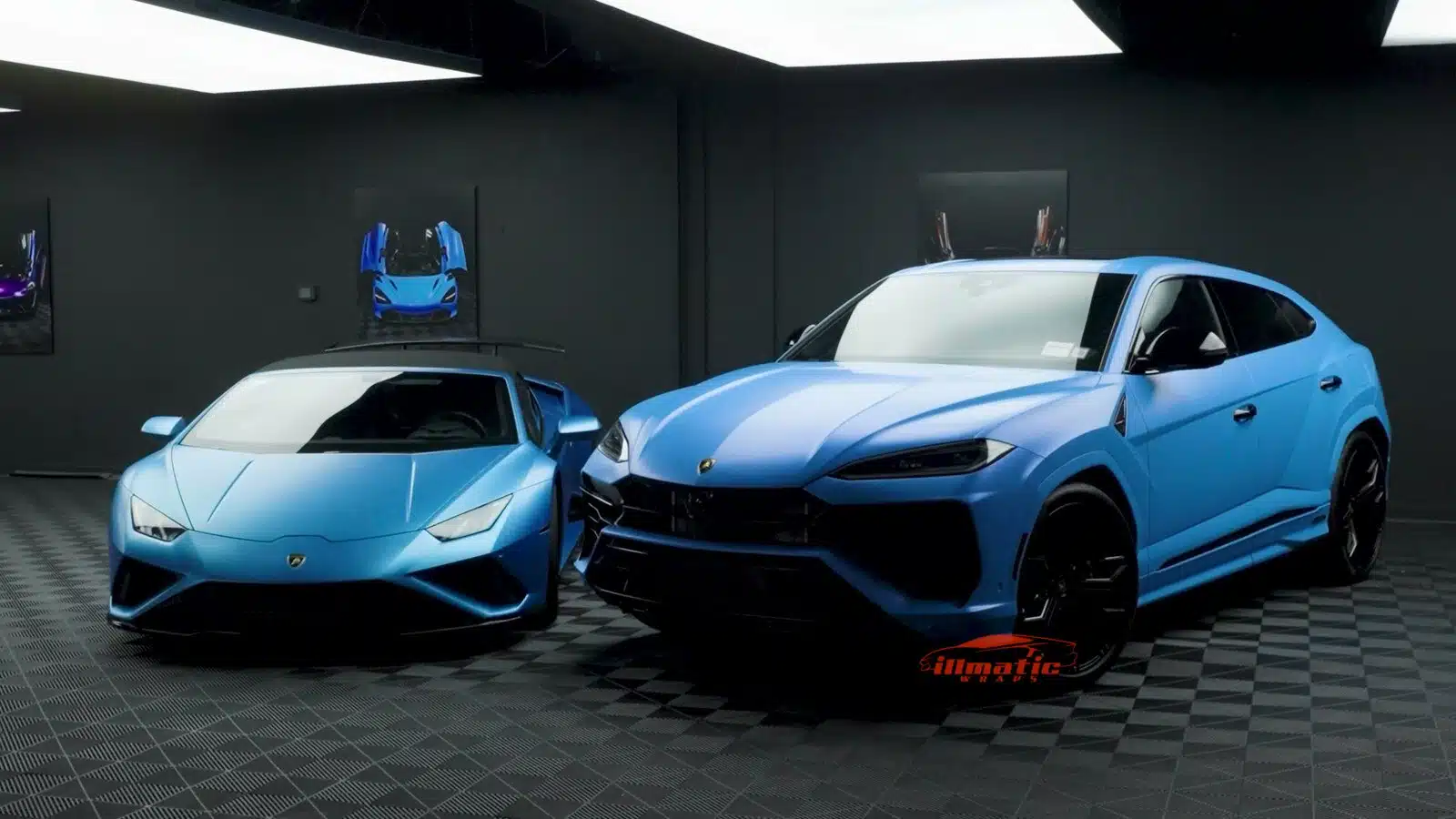
How long a car wrap lasts in New Jersey, by the film makers’ own numbers
Avery and 3M publish wrap film life by panel and climate zone. Here are their tables, what New Jersey does…
Read more
PPF vs ceramic coating for a car driven in New Jersey
What the film and coating makers publish about thickness, chips and durability, matched against North Jersey road conditions.
Read more